Physical Address
304 North Cardinal St.
Dorchester Center, MA 02124
Physical Address
304 North Cardinal St.
Dorchester Center, MA 02124

Flashcards have been part of language learning for decades, and despite trends toward apps, courses, and immersive platforms, they remain one of the most reliable and research-supported tools for building vocabulary and grammar in Japanese.
This article explains why flashcards still work, how spaced repetition supports long-term memory, and how Japanese learners can use them strategically—especially when tackling kana, kanji, and core vocabulary.
One of the main reasons flashcards are so effective is something called retrieval practice. When you look at a Japanese word—like ねこ (neko) or 大きい (ookii)—and try to recall the meaning, you’re forcing your brain to strengthen the memory pathway.
Research consistently shows that actively recalling information beats passive study methods like rereading, highlighting, or listening alone.
A 2025 study by Daiu & Mihali found that learners who reviewed vocabulary at spaced intervals retained significantly more information than those who studied through traditional note-style review.
Even though the study involved English learners, the underlying cognitive principle applies perfectly to Japanese.
Spaced review =
Japanese learners especially benefit from spaced repetition because the language includes:
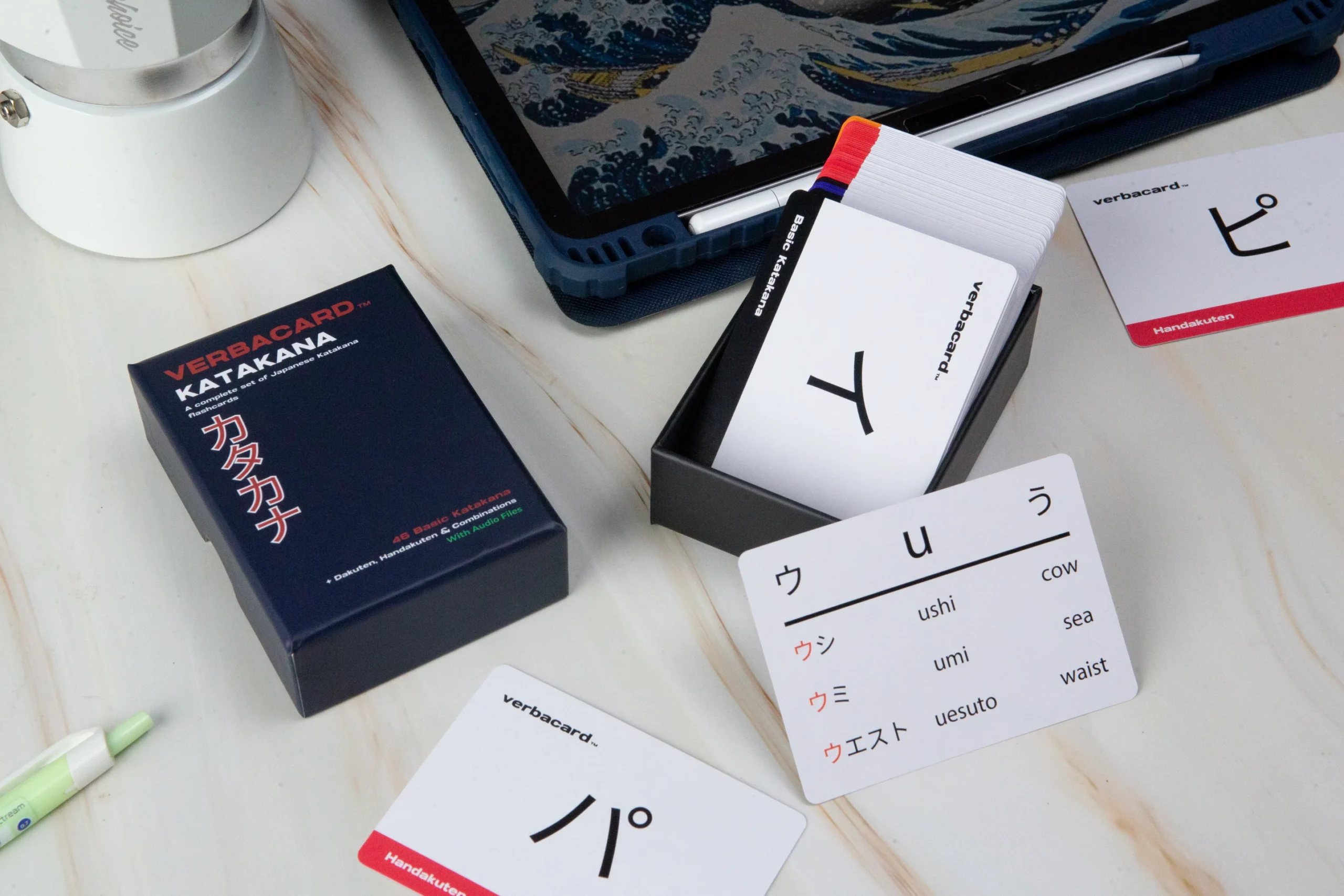
Hiragana Flashcards or Katakana Flashcards break this complexity into manageable pieces.
Hiragana and katakana are foundational. Flashcards allow you to:
Tip:
Master kana first to avoid romaji habits that slow long-term progress.
Japanese vocabulary requires repetition because many words look or sound similar—especially for beginners.
Flashcards help you group and internalize words like:
Common Mistake:
Memorizing vocabulary without seeing it in simple sentences. Add examples on the back of the card.
Kanji is where most learners quit. Flashcards help you break the process down into:
Consistent repetition is the key to remembering characters like:
Flashcards let you revisit them until the memory sticks.
Flashcards aren’t just for vocabulary and kanji. They’re excellent for memorizing grammar patterns like:
Short, targeted cards help you internalize rules you’ll see over and over in beginner Japanese.
Don’t flip the card too quickly. Try to:
Instead of grouping all nouns or all verbs:
Shuffle cards from different categories to strengthen memory retrieval.
5–10 minutes daily beats one long weekly session.
Example sentences deepen understanding and reduce confusion between similar words.
Perfect for absolute beginners. Learning kana first is essential because it forms the foundation of all Japanese reading and writing. Relying on romaji creates bad habits, slows down progress, and makes real Japanese texts feel harder than they actually are. Once you know hiragana and katakana, every word becomes easier to decode, your pronunciation improves, and you can begin learning vocabulary and grammar the way they’re truly written.
Include:
Note: Most users start learning Japanese with Hiragana, and these Hiragana Flashcards are a great place to start.
Kanji flashcards are especially powerful because they break down each character into manageable, memorable pieces. A good kanji card should include the kanji itself, the onyomi and kunyomi readings, a keyword or core meaning, and a few example vocabulary words that use the character in real context. This helps you avoid memorizing kanji in isolation, which is one of the biggest pitfalls beginners face.
Including example words is important because kanji almost always change meaning slightly depending on what they’re paired with. Seeing how the character behaves inside real vocabulary makes it much easier to remember both its meaning and its readings.
Vocabulary flashcards work best when reviewed in both directions.
Using both directions ensures you don’t fall into the trap of being able to understand words passively but struggling to produce them. This two-way method is one of the simplest and most effective ways to build a strong vocabulary foundation for Japanese.
Grammar flashcards allow you to break patterns and structures into small, digestible pieces. The most effective grammar cards include a short, simple explanation of the pattern and one or two example sentences that show how it’s used in natural Japanese. Keeping them short prevents overwhelm and helps you internalize the pattern more easily.
The goal with grammar flashcards isn’t memorizing definitions—it’s recognizing the pattern when you see it and being able to use it confidently in your own sentences. Concise examples make this process much smoother.
Tips:
Say each Japanese word out loud when you review it. Speaking engages additional memory pathways and helps reinforce pronunciation and recall.
Common Mistake:
Many learners rely only on recognizing Japanese words when they see them. Make sure you also practice recalling the word from English to Japanese—this strengthens active recall and prevents “passive understanding.”
Quick Insight:
Short, consistent daily study sessions are far more effective than long, irregular cram sessions. Even 5–10 minutes a day creates stronger long-term retention.
Flashcards remain one of the most effective ways to learn Japanese because they align perfectly with how memory works. Retrieval practice, spaced repetition, and consistent exposure make vocabulary, grammar, and kanji far more manageable.
Whether you’re preparing for JLPT N5 or building long-term fluency, flashcards offer a simple, proven, and timeless method for boosting retention and confidence.
For more Japanese learning guides, vocabulary breakdowns, and grammar explanations, check out our other posts on GoJapanese.io.